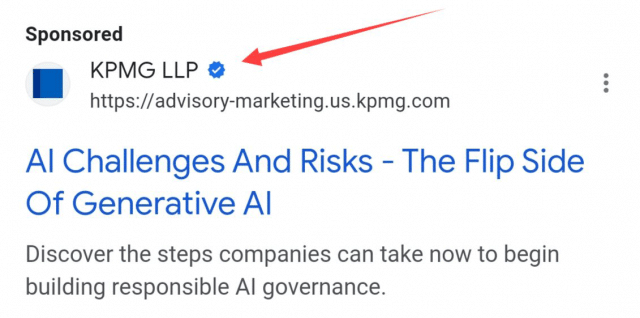
What’s going on. Previously, we noticed a blue verification marker and a blue badge-like label, and now a gold version has emerged. It is important to note that this development is part of Google’s ongoing advertiser verification initiative, and we are now witnessing Google implementing small blue checkmarks for advertisers who have been verified.Image courtesy of Barry Schwartz at Search Engine Roundtable
Why we care. These verification badges signal that an advertiser has been vetted and approved by Google, which can lead to increased click-through rates and overall ad performance. In a competitive digital advertising landscape, leveraging the added trust provided by these labels can help advertisers stand out from the crowd and improve their ROI.
Google expanded displaying shipping and return information in its search results last week and added new return policy documentation in the product structured data help section specific for merchant listings. Today, Google has expanded the number of countries that can use applicableCountry required property from 25 countries to a total of 50 countries.
What changed. Google updated the return section of this structured data help document to write, “You can specify up to 50 countries.” Previously it said, “up to 25 countries.” Here are before and after screenshots:
Before it said 25 countries.Now it says 50 countries.
More shipping and return snippets. Some are now noticing more search result snippets in Google Search showing the shipping and return snippets. Here is one example:
Last week, Google announced that it will now display shipping & returns info in Google Search results.
Like product pricing, this info is based on structured data or feed data provided in the Merchant Center.
Why we care. If you are using this markup and your country is supported, you may soon start to see the shipping and return information show up within your search result snippets in Google Search. Check out the new markup and make sure to validate the markup in Search Console to ensure it will work as expected.
These small snippet changes can potentially have a large impact on your click-through rate from Google Search to your web site.
At some point, your PPC performance will take a nose-dive. Once you’ve managed PPC campaigns long enough, you will likely navigate numerous crises.
Pinpointing the source of a specific issue can be challenging. Here’s how PPC managers can embrace root cause analysis to mitigate performance issues and get things back on track.
Root cause analysis for PPC accounts
Root cause analysis is necessary to identify the underlying factors impacting PPC account performance.
The process involves a systematic approach to identifying the problem, collecting data, analyzing the data, and determining the root cause of the issue.
For reference, here is a quick list of the steps you should follow to conduct root cause analysis within your PPC account:
Define the problem
Clearly state the problem and its impact on your PPC campaigns. Make sure everyone involved understands the issue.
Gather data
Collect relevant data about the problem, such as when it started, how often it occurs, and what factors are involved.
Identify potential causes
Brainstorm all possible causes of the problem. Use fishbone diagrams or the “Five Whys” technique to identify the root cause.
Test the cause
Analyze the data to see which potential reason is most likely to be the root cause. Test your hypothesis by implementing a solution and measuring its effectiveness.
Implement a solution
Develop and implement a solution that addresses the root cause. Monitor the results in your PPC account and adjust the solution as needed.
Finally, document the process so you can learn from it and prevent similar issues in the future.
This process can be applied to almost any business challenge. However, this process is highly relevant when diagnosing a PPC account.
Get the daily newsletter search marketers rely on.
The third step in our root cause analysis process mentioned the "Five Whys Technique," a tool used to identify the underlying cause of a problem. It's a general principle that is relevant to our PPC analysis process.
The technique involves asking "why" five times to drill down to the root cause of the issue, based on the idea that there is always a deeper cause to every problem.
For example, here is a thought exercise when analyzing a PPC account:
Conversions dropped by 25% between April 15 and April 18. Why?
Let's analyze PPC traffic first. Traffic remained steady, and other metrics appeared stable, but the average conversion rate dropped. Also, there were no significant changes to targeting, bid algorithm, or audience signals. Why else?
Website traffic isn't an issue. Let's look at the website. Engagement metrics such as bounce rate and time on site look stable. Site engagement was steady, but purchase rates declined. Why?
Let's ask the website team if any site changes were made. Yes, they did make changes to the site during that. Why?
The development team removed a series of popular products due to low inventory. They still needed to have a chance to notify all the teams.
Of course, diagnosing a PPC account can take many different routes. But you can see how this process pushes account managers to continue digging for the right solution.
Isolating the impacted timeframe
The first step in identifying and analyzing an issue within a PPC account is isolating the timeframe where a change occurred.
This makes it easier to pinpoint the root cause of the problem and develop an effective strategy to address it.
Account managers can thoroughly analyze the data by narrowing down the period, including the keywords, landing pages and ad copy, to identify the factors contributing to the decline.
This analysis can help account managers develop a tailored strategy to improve performance and prevent future declines.
Additionally, isolating the timeframe allows search marketers to measure the effectiveness of any implemented solutions and ensure performance remains stable and positive going forward.
Determining macro and micro issues
When analyzing account performance, it is crucial to differentiate between macro and micro issues.
Macro issues affect the entire account and can result from external factors such as changes in search algorithms or the introduction of new competitors. Examples of macro issues include:
Problems with targeting or ad messaging.
Lack of budget.
Issues with landing pages.
Resolving macro issues can lead to significant improvements in account performance.
External factors such as changing search algorithms, user behavior, or seasonal changes can also affect account performance.
Therefore, teams should consider these factors to develop an effective root cause analysis process to determine potential issues within a PPC account.
On the other hand, micro issues are specific to individual campaigns and require a different level of attention. Examples of micro issues include:
Low click-through rates.
High bounce rates.
Low conversion rates.
Nevertheless, identifying and addressing micro matters can significantly improve campaign performance.
Tools for PPC root cause analysis
Root cause analysis is an excellent framework for diagnosing your PPC campaigns. However, you will need tools to help activate this process.
Below are a few tools that can help you analyze issues as they arise within PPC.
Account change history
A performance change in your PPC account can often be traced back to a specific campaign change. The account change history log is the first place you conduct your analysis within Google and Bing.
Account reporting
As mentioned in our five-step process, isolate the timeframe and affected campaigns.
Your Google and Bing advertising accounts contain the data and the reports you need to get you started (and perhaps finished) with your root cause analysis.
Pair your account report to isolate the time and campaigns with your change history log to understand if a specific change is the cause of your issue.
Google Analytics
As part of your root cause analysis, you should also look at how all digital channels are trending. Google Analytics helps analyze traffic sources, including paid, organic, social, and referral.
If you need to diagnose a performance issue, you first isolate the impacted timeframe and then review Google Analytics to understand if multiple channels have been affected.
Google Trends
We have discussed macro-trends influencing account performance. Google Trends helps understand high-level trends within your industry/vertical.
This tool varies in its usefulness. Google Trends is the highest level of data you can review and the least personalized to your specific account.
Still, it can provide industry trends as you conduct your analysis.
A systematic approach to analyzing PPC issues
A robust root cause analysis process is critical to identifying the underlying factors affecting PPC account performance.
By following a systematic approach to identifying the problem, gathering relevant data, analyzing it, and determining the root cause of the issue, PPC marketers can develop a tailored strategy to improve performance and prevent future declines.
When performance fluctuations arise (and they will), remember not to panic and take a methodical approach to solve the problem.
Are you tired of spending countless hours on link building for your website only to see minimal results? In this article, you’ll find some risk-free tips on outsourcing link building effectively, so you can sit back, relax and watch your website rise to the top of search engine rankings.
The role of link building in SEO
Are you ready to rock your SEO game? Well, you better be because Hubspot reports that a whopping 64% of modern enterprises are investing in SEO to stay ahead of the competition.
And what’s the secret sauce to SEO success? It’s link building! A study by Ahrefs found that the number of referring domains to a webpage strongly correlates with its search engine ranking position. In other words, the more quality backlinks you have, the better your chance of ranking higher.
However, over 41% of digital marketers think link building is like rocket science. It’s confusing, time-consuming, and sometimes downright frustrating.
So, there are numerous advantages that SEO experts can reap by outsourcing their link-building efforts.
Saves time and resources
According to Seotribunal, 65% of marketers affirm link building is the most challenging SEO tactic. Partnering with a reliable provider can relieve the pressure of executing complex link-building campaigns while freeing valuable time and resources.
Provides access to specialized expertise
Link building is no child’s play. Seasoned professionals know their onions and have the required skills and expertise to execute effective linking campaigns. What’s more, their extensive network of contacts enables them to procure links with greater speed and efficacy.
When securing top-notch links, you have two ways: hire an in-house team of seasoned link builders or outsource the job to experts in the field.
Building an in-house team may only be financially viable if you have a substantial number of projects to undertake. Otherwise, attempting to build such a team could drain your resources dry in no time.
Undoubtedly, the most significant expense of running an in-house link-building team is typically the salaries. Here are figures gleaned from the Glassdoor website:
The average link builder salary. Source: Glassdoor
Imagine hiring a full-time link-building specialist. With all the time and effort they’ll be putting into research and outreach, you can expect 13-15 backlinks per month. The cost of each of these precious links can skyrocket to an eye-watering $500-$700 per placement.
Moreover, expect additional expenses such as benefits, recruitment and hiring, tools and technology, training and overhead costs. So, with an in-house specialist, one link can cost you $800+.
When outsourcing to a third-party agency, companies only pay for the services rendered and are free from worrying about employee salaries, benefits, incentives and overhead costs.
Ready to give outsourcing a shot? Here are tips on how to achieve optimal results from outsourcing your link-building endeavors.
How to outsource link building without risk
Now, let’s delve into the essential steps to take on your journey toward prosperous link-building outsourcing.
Prepare your website
Your main task is to prepare a favorable ground for link building. To prepare your website, follow these steps:
Organize your site structure with a clear hierarchy and easy navigation;
Create engaging content with multimedia, which can increase indexed pages by 434%;
Optimize content for SEO with relevant keywords, fast loading time and mobile-friendly design;
Build a strong internal linking structure to improve visibility and ranking;
Fix technical issues, including broken links, for easy crawling by search engines.
Some link-building agencies offer to help their clients with site audits or content creation.
Choose an experienced contractor
A quick jaunt over to Clutch and a search for “link-building agency” reveals an avalanche of almost 12,000 potential collaboration options on that site alone.
Now, let’s take a closer look at the critical factors you should keep in mind when selecting an agency to partner with.
Pricing
While you might be able to find a bargain-basement deal on some shady corner of the internet, you’re probably better off investing in a reputable agency that can deliver real results.
Take a look at this screenshot from Fiverr, where a search for “Link Building” shows these surprising prices:
Search results for “Link Building” on Fiverr
If an outsourcing agency promises to get you 10 backlinks for only $100, they might be talking about low-quality links from forums or comment sections (Google ignores them in its ranking algorithm). Here’s what John Mueller, a senior search analyst at Google, says about it:
“You could go off and create millions of links across millions of websites if you wanted to, and we could just ignore them all.”
For example, at Editorial Link, a top-rated link-building agency on Clutch, one quality link starts at $350. Sticking only to white-hat techniques, the Editorial Link team builds high-authority editorial links to create strong portfolios and bring natural traffic to linked websites.
Through outreach efforts, the Editorial Link team gets top-quality backlinks from highly authoritative sources with a significant online presence: g2.com, Hubspot.com, Cloudways.com, Clickup.com, monday.com, Wordstream.com, Similarweb.com and many more.
They do not charge a prepayment and invoice the clients only after link placement approval. The team strives for maximum transparency and is not willing to sell dozens of low-quality links (which will not make any impact on the results of their clients) for the same amount.
Transparency
It’s crucial to evaluate an agency’s level of transparency before engaging in any business with them.
Some important questions to ask:
What methods and strategies will they use while working on your project?
Do they charge upfront or only when results are delivered?
Are they willing to share the results of their successful campaigns?
Does the agency disclose domains before publication?
The last point is especially critical. In this way, you get a chance to personally check whether the site is suitable for you to get a backlink. It’s not rare for domains with high DR (70+) to sell the opportunity to place a guest post or a link. It is advisable to steer clear of websites that engage in the sale of guest posts and are monitored by Google.
Generating spammy backlinks has the potential to harm search engine rankings, painting such a bleak picture:
Traffic drop on a site that was sanctioned by Google in February 2020
Working with a transparent agency can help minimize your risk and ensure you don’t end up worse off than when you started.
Monitor the process
While trusting a provider, it’s important to keep an eye on the work process and make sure the agency follows the agreed guidelines and techniques.
Regular communication. Regular communication allows you to receive updates on the progress of your campaign and discuss any concerns or feedback you may have.
Performance metrics. To track the success of your link-building efforts, ask the agency to provide regular reports detailing the metrics you care about most. This could include information on the number of links acquired, traffic generated, and rankings improved.
Quality control. While your agency may be responsible for acquiring links for your site, it’s important to review the quality of the links they’re obtaining. Use tools like Ahrefs, Moz or Majestic for that.
Red flags
Once you know how to act to mitigate the risks of cooperating with a link-building team, it’s time to tell you what you shouldn’t overlook as you prepare to accept the provider’s offer:
Need for speed. Building high-quality links is not a sprint, it’s a marathon. Beware of services that claim to get you links in just a few days. They’re likely using shady tactics like link farms.
False promises. If a service is 100% guaranteeing you a spot on the first page of Google, they might as well be claiming they can turn lead into gold.
The curious case. Transparency is key in this industry, and anyone unwilling to present you with the results of their previous campaigns is likely hiding something. Insist on openness and honesty from the get-go.
Conclusion
Link-building outsourcing is a cost-effective and efficient way to hit marketing goals and improve SEO results. The key to this is trust-based reliable relationships with the right link-building service provider.
Are you struggling with your content marketing strategy? Do you lack time, resources, and a clear purpose? The Content Marketing Quick Start Guide from MoreVisibility is here to help! This guide provides tips and guidance to jumpstart your content planning and creation, helping you overcome common challenges such as lack of time, strategy, or production resources.
One of the most critical aspects of content marketing is Google E-E-A-T, which stands for experience, expertise, authoritativeness, and trustworthiness. In this guide, you’ll learn how to create content that meets these guidelines, ensuring that your website ranks higher in search engine results and drives more traffic to your site.
The guide will walk you through the different types of content you’ll need to plan, create, and optimize. Visit Digital Marketing Depot to download the Content Marketing Quick Start Guide.
The Google Ads Status Dashboard has indicated that there have been error messages, high latency, and/or other unexpected behavior today.
What’s happening. We’re not sure what the issues are or when they’ll be resolved. But keep checking the status dashboard for updates.
Why we care. If you’re seeing errors or unexpected issues in your Ads dashboard, be aware that they may be related to this latest issue. Monitor your campaigns closely and be on the lookout for overspending, ad disapprovals, or even suspensions.
On Sunday, multiple Meta advertisers noticed their accounts had spent up to four times their daily budget in a matter of hours. Advertisers also noticed their average CPA’s (cost per acquisition) had nearly tripled in the same time period.
What happened. Meta has been quiet on the issue. They have not addressed the issue publicly or made a statement.
However, Search Engine Land contributor Curt Maly, who is in a Meta group for Facebook advertisers, said that Meta had posted the following statement inside the group:
“Earlier yesterday, beginning at 1AM PT, an issue caused some ads, primarily on Facebook (and to a lesser extent on Instagram) to have higher variability in spend and delivery.
This issue has since been resolved, and you should see that your campaign delivery has returned to normal across platforms, including on Audience Network. If you paused your campaigns as a result of this issue, you should now unpause them.
We’ve identified the root cause of this issue — which was a problem with an automated system — and we’ve put measures in place to improve our systems moving forward.
We sincerely apologize for any inconvenience this may have caused, and appreciate your understanding and patience during this time.
We are still investigating the overall impact of this issue, including the possibility of refunds for advertisers.”
Meta spokesperson
So, a few things with this statement, Maly says:
Facebook automates everything, so this does not come as a surprise
I am surprised how this was a global issue, seen world wide. Typically, Meta tests new automation in small batches, something broke.
Meta automates everything from ad review, ad account review, customer service and so much more. At this point, the only way for META to scale and be more profitable with ads, is to automate, automate, automate.
Meta used automation to turn back on paused ads, how did Meta know what ads to turn back on globally? I am sure there were lots of people who paused ads and wanted them to remain paused.
Crickets from Meta. Meta has not made a public statement or addressed the issue on Twitter or any other platform (open to the general public). At least when Google has issues, Ads Liaison Ginny Marvin is on top of it.
Meta does have an outage tool you can use to see if there are any known glitches. On Sunday it showed that there was a “Major Disruption” in the Ads Delivery category. Now, that status is back to normal.
What a mess. Here’s what other advertisers are experiencing.
Why we care. This is a major glitch that could affect any Facebook advertiser. Check your ad campaigns and pause any that are overspending. We don’t know for sure if Facebook is going to issue refunds, what caused the issue, if it’s fixed, and how they’re going to make it right, but check back for more info.


 HUGE PSA
 (@Ryan12Banks)