Monday, 30 August 2021

How to Conduct the Perfect Marketing Experiment [+ Examples]

After months of hard work, multiple coffee runs, and navigation of the latest industry changes, you've finally finished your next big marketing campaign.

Complete with social media posts, PPC ads, and a sparkly new logo, it's the campaign of a lifetime.

But how do you know it will be effective?

Free Download: A/B Testing Guide and Kit

While there's no sure way to know if your campaign will turn heads, there is a way to gauge whether those new aspects of your strategy will be effective.

If you want to know if certain components of your campaign are worth the effort, consider conducting a marketing experiment.

Marketing experiments give you a projection of how well marketing methods will perform before you implement them. Keep reading to learn how to conduct an experiment and discover the types of experiments you can run.

What are marketing experiments?

A marketing experiment is a form of market research in which your goal is to discover new strategies for future campaigns or validate existing ones.

For instance, a marketing team might create and send emails to a small segment of their readership to gauge engagement rates, before adding them to a campaign.

It's important to note that a marketing experiment isn't synonymous with a marketing test. Marketing experiments are done for discovery, while a test confirms theories.

Why should you run a marketing experiment?

Think of running a marketing experiment as taking out an insurance policy on future marketing efforts. It’s a way to minimize your risk and ensure that your efforts are in line with your desired results.

Imagine spending hours searching for the perfect gift. You think you’ve found the right one, only to realize later that it doesn’t align with your recipient’s taste or interests. Gifts come with receipts but there’s no money-back guarantee when it comes to marketing campaigns.

An experiment will help you better understand your audience, which in turn will enable you to optimize your strategy for a stronger performance.

Performing a marketing experiment involves doing research, structuring the experiment, and analyzing the results. Let's go through the seven steps necessary to conduct a marketing experiment.

1. Brainstorm and prioritize experiment ideas.

The first thing you should do when running a marketing experiment is start with a list of ideas.

Don’t know where to start? Look at your current priorities. What goals are you focusing on for the next quarter or the next year?

From there, analyze historical data. Were your past strategies worked in the past and what were your low performers?

As you dig into your data, you may find that you still have unanswered questions about which strategies may be most effective. From there, you can identify potential reasons behind low performance and start brainstorming some ideas for future experiments.

Then, you can rank your ideas by relevance, timeliness, and return on investment so that you know which ones to tackle first.

Keep a log of your ideas online, like Google Sheets, for easy access and collaboration.

2. Find one idea to focus on.

Now that you have a log of ideas, you can pick one to focus on.

Ideally, you organize your list based on current priorities. As such, as the business evolves, your priorities may change and affect how you rank your ideas.

Say you want to increase your subscriber count by 1,000 over the next quarter. You’re several weeks away from the start of the quarter and after looking through your data, you notice that users don’t convert once they land on your landing page.

Your landing page would be a great place to start your experiment. It’s relevant to your current goals and will yield a large return on your investment.

Even unsuccessful experiments, meaning those that do not yield expected results, are incredibly valuable as they help you to better understand your audience.

3. Make a hypothesis.

Hypotheses aren't just for science projects. When conducting a marketing experiment, the first step is to make a hypothesis you're curious to test.

A good hypothesis for your landing page can be any of the following:

    • Changing the CTA copy from "Get Started" to "Join Our Community" will increase sign-ups by 5%.
    • Removing the phone number field from the landing page form will increase the form completion rate by 25%.
    • Adding a security badge on the landing page will increase the conversion rate by 10%.

This is a good hypothesis because you can prove or disprove it, it isn't subjective, and has a clear measurement of achievement.

A not-so-good hypothesis will tackle several elements at once, be unspecific and difficult to measure. For example: "By updating the photos, CTA, and copy on the landing page, we should get more sign-ups.

Here’s why this doesn’t work: Testing several variables at once is a no-go when it comes to experimenting because it will be unclear which change(s) impacted the results. The hypothesis also doesn’t mention how the elements would be changed nor what would constitute a win.

Formulating a hypothesis takes some practice, but it’s the key to building a robust experiment.

4. Collect research.

After creating your hypothesis, begin to gather research. Doing this will give you background knowledge about experiments that have already been conducted and get an idea of possible outcomes.

Researching your experiment can help you modify your hypothesis if needed.

Say your hypothesis is, "Changing the CTA copy from "Get Started" to "Join Our Community" will increase sign-ups by 5%." You may conduct more market research to validate your ideas surrounding your user persona and if they will resonate better with a community-focused approach.

It would be helpful to look at your competitors’ landing pages and see which strategies they’re using during your research.

5. Select your metrics.

Once you've collected the research, you can choose which avenue you will take and what metrics to measure.

For instance, if you’re running an email subject line experiment, the open rate is the right metric to track.

For a landing page, you’ll likely be tracking the number of submissions during the testing period. If you’re experimenting on a blog, you might focus on the average time on page.

It all depends on what you’re tracking and the question you want to answer with your experiment.

6. Execute the experiment.

Now it's time to create and perform the experiment.

Depending on what you’re testing, this may be a cross-functional project that requires collaborating with other teams.

For instance, if you’re testing a new landing page CTA, you’ll likely need a copywriter or UX writer.

Everyone involved in this experiment should know:

  • The hypothesis and goal of the experiment
  • The timeline and duration
  • The metrics you’ll track

7. Analyze the results.

Once you've run the experiment, collect and analyze the results.

You want to gather enough data for statistical significance.

Use the metrics you've decided upon in the second step and conclude if your hypothesis was correct or not.

The prime indicators for success will be the metrics you chose to focus on.

For instance, for the landing page example, did sign-ups increase as a result of the new copy? If the conversion rate met or went above the goal, the experiment would be considered successful and one you should implement.

If it’s unsuccessful, your team should discuss the potential reasons why and go back to the drawing board. This experiment may spark ideas of new elements to test.

Now that you know how to conduct a marketing experiment, let's go over a few different ways to run them.

Marketing Experiment Examples

There are many types of marketing experiments you can conduct with your team. These tests will help you determine how aspects of your campaign will perform before you roll out the campaign as a whole.

A/B testing is one of the popular ways to marketing in which two versions of a webpage, email, or social post are presented to an audience (randomly divided in half). This test determines which version performs better with your audience.

This method is useful because you can better understand the preferences of users who will be using your product.

Find below the types of experiments you can run.

1. Website

Your website is arguably your most important digital asset. As such, you’ll want to make sure it’s performing well.

If your bounce rate is high, the average time on page is low, or your visitors aren’t navigating your site in the way you’d like, it may be time to run an experiment.

2. Landing Pages

Landing pages are used to convert visitors into leads. If your landing page is underperforming, running an experiment can yield high returns.

The great thing about running a test on a landing page is that there are typically only a few elements to test: your background image, your copy, form, and CTA.

3. CTAs

Experimenting with different CTAs can improve the number of people who engage with your content.

For instance, instead of using "Buy Now!" to pull customers in, why not try, "Learn more."

You can also test different colors of CTAs as opposed to the copy.

4. Paid Media Campaigns

There are so many different ways to experiment with ads.

Not only can you test ads on various platforms to see which ones reach your audience the best, but you can also experiment with the type of ad you create.

As a big purveyor of GIFs in the workplace, animating ads are a great way to catch the attention of potential customers. Those may work great for your brand.

You may also find that short videos or static images work better.

social media ad on InstagramThis Instagram ad from We're Not Really Strangers uses multimedia to make its post stand out. If you're testing out PPC advertising, try diversifying those ads to capture the interest of more audiences.

Additionally, you might run different types of copy with your ads to see which language compels your audience to click.

To maximize your return on ad spend (ROAS), run experiments on your paid media campaigns.

4. Social Media Platforms

Is there a social media site you're not using? For instance, lifestyle brands might prioritize Twitter and Instagram, but implementing Pinterest opens the door for an untapped audience.

You might consider testing which hashtags or visuals you use on certain social media sites to see how well they perform.

The more you use certain social platforms, the more iterations you can create based on what your audience responds to.

You might even use your social media analytics to determine which countries or regions you should focus on — for instance, my Twitter Analytics, below, demonstrates where most of my audience resides.
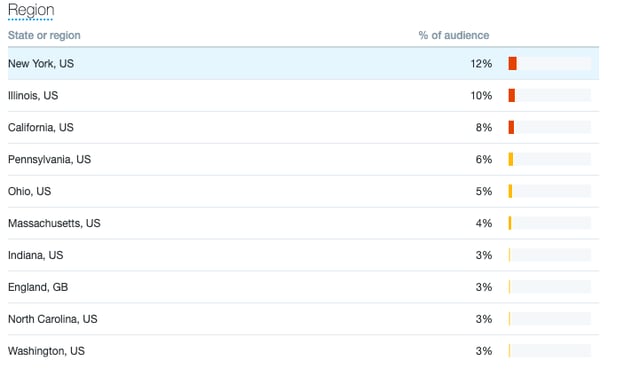
personal twitter analytics

If alternatively, I saw most of my audience came from India, I might need to alter my social strategy to ensure I catered to India's time zone.

When experimenting with different time zones, consider making content specific to the audience you're trying to reach.

5. Copy

Your copy — the text used in marketing campaigns to persuade, inform, or entertain an audience — can make or break your marketing strategy.

If you’re not in touch with your audience, your message may not resonate. Perhaps you haven’t fleshed out your user persona or you’ve conducted limited research.

As such, it may be helpful to test what tone and concepts your audience enjoys. A/B testing is a great way to do this, you can also run surveys and focus groups to better understand your audience.

6. Email

Email marketing continues to be one of the best digital channels to grow and nurture your leads.

If you have low open or high unsubscribe rates, it's worth running experiments to see what your audience will respond best to.

Perhaps your subject lines are too impersonal or unspecific. Or the content in your email is too long.

By playing around with various elements in your email, you can figure out the right strategy to reach your audience.

Ultimately, marketing experiments are a cost-effective way to get a picture of how new content ideas will work in your next campaign, which is critical for ensuring you continue to delight your audience.

Editor's Note: This post was originally published in December 2019 and has been updated for comprehensiveness.
The Ultimate A/B Testing Kit


from Marketing https://ift.tt/34JeXN8
via

Google says title changes don’t impact rankings

“This just changes the displayed titles, it doesn’t change ranking or takes [sic] anything different into account,” he elaborated.

Please visit Search Engine Land for the full article.


from Search Engine Land: News & Info About SEO, PPC, SEM, Search Engines & Search Marketing https://ift.tt/2UYHNJF
via

Four tools to check for title changes in the SERPs

These tools let you see whether Google changed your title, the date it changed and what it was changed to.

Please visit Search Engine Land for the full article.


from Search Engine Land: News & Info About SEO, PPC, SEM, Search Engines & Search Marketing https://ift.tt/3mKSb37
via

How Google and Yelp handle fake reviews and policy violations

A side-by-side analysis of Google and Yelp’s respective approaches, policies and punitive measures.

Please visit Search Engine Land for the full article.


from Search Engine Land: News & Info About SEO, PPC, SEM, Search Engines & Search Marketing https://ift.tt/3jz6O81
via

Trends behind the Google title tag changes; Monday’s daily brief

Plus, submit a pitch to speak at SMX Next

Please visit Search Engine Land for the full article.


from Search Engine Land: News & Info About SEO, PPC, SEM, Search Engines & Search Marketing https://ift.tt/3BDv671
via

Twitter's Testing Social Commerce: What Marketers Need to Know

When you think of online shopping destinations, Twitter may not be the first place that comes to mind. However, with ecommerce sales continuing to rise due in part to the COVID-19 pandemic, social platforms want in on the action.

On Instagram, business owners can add a "shop" feature to their profile, allowing users to make purchases directly from the profiles of their favorite brands. Similarly, TikTok teased an upcoming shop feature and integration with Shopify earlier this year. Now Twitter is testing new strategies to integrate online shopping experiences into the user experience.

Download Now: Social Media Trends in 2021 [Free Report]

The platform previously had a "Buy Now" button before retiring the feature in 2017 to focus on other avenues. Now Twitter appears to be circling back on this idea giving business account holders new tools for converting customers on the platform potentially turning Twitter into a space where buyers can discover new products while engaging in conversation with brands and communities.

Here’s what we know about Twitter’s commerce experiments so far.

Why Twitter Is Testing Ecommerce Features

In early 2021, Twitter executives announced their goal to double revenue to $7.5 billion and reach 315 million active users by the end of 2023.

Working towards such ambitious goals, Twitter is looking to introduce new revenue streams to help grow and monetize its user base – and one of those key streams is an ecommerce play designed to give businesses the tools they need to drive conversational sales.

During Twitter’s 2021 investor’s call Bruce Falck, Revenue Product Lead at Twitter said:

"We’re also starting to explore ways to better support commerce on Twitter. Our MAP (mobile application program) efforts help us understand how our users are transacting on the platform. Installing an app via an ad is in itself a form of commerce. We know people come to Twitter to interact with brands and discuss their favorite products.

In fact, you may have even noticed some businesses already developing creative ways to enable sales on our platform. This demand gives us confidence in the power of combining real-time conversation with an engaged and intentional audience."

Essentially, the platform has aggressive business goals over the next two years and sees commerce as a viable way to increase engagement and revenue opportunities outside of traditional advertising.

Twitter's Ecommerce Test

The Shop Module

In July 2021, Twitter rolled out a robust ecommerce test: The Shop Module.

Twitter's announcement of The Shop Module

Image Source

The Shop Module will allow brands to display products in a carousel format at the top of the profile. When a user visits a brand’s Twitter account, they will be able to scroll through a handful of products, have the ability to tap in to learn more about each product, and eventually purchase.

This initial test is designed to determine the shopability of Twitter profiles. Though consumers typically visit Twitter to connect directly with brands for questions and customer service inquiries, Twitter is looking to understand what in-app behavior can drive users to make a purchase. As more data is collected, it will be interesting to see if Twitter can see a clear link between conversation topics and sales of related products through the platform.

Twitter has rolled out this feature to a small number of brands across industries based in the United States, and Twitter users based in the U.S. who use the English app on iOS devices are currently able to see it live.

With the feature being deployed to business profiles offering vastly different products, Twitter is also testing which product verticals sell from the platform. See The Shop Module in action below.

Twitter's Shop Module as seen on the GameStop Twitter Profile

Image Source

Shoppable Twitter Cards

In March 2021, Twitter also began testing commerce features for organic tweets. Essentially, tweets that feature a direct link to a shopping page or product can generate a new Twitter card with a "shop" button and auto-populated product details.

Twitter Shopping Card

Image Source

When a user clicks the shop button, they would be taken directly to the product page of the account’s website. The shoppable Twitter card appears very similar to promoted tweets. With this feature, Twitter is testing the viability of commerce through organic shares.

At the time of publication, this feature is still an experiment and hasn’t been rolled out to all Twitter users. It has been reported the shoppable Twitter card has been seen by international users and on Android devices.

How Brands Could Leverage Social Commerce on Twitter

Even if your company profile hasn’t been granted access to these new features, now is the perfect time to put a strategy in place so you can be ready to use Twitter’s commerce tools to your advantage.

1. Create organic conversation around products and services.

Consumers engage with brands on Twitter to ask questions and surface customer service inquiries. Start organically aligning your content on Twitter with products and services you’d like to highlight in the space to prepare your audience for what’s ahead with these new commerce features.

For example, a skincare company could start a conversation with its audience on Twitter about creating the ideal skincare routine. The company’s profile could start a thread with educational tweets about each essential step of an effective skincare routine and why each step is beneficial.

The audience would likely join the conversation sharing steps of their skincare routine and asking for product recommendations, creating space for the brand to share more information about its products to an engaged audience.

By continuing to prime the audience with these types of interactions, once the skincare brand gains access to Twitter’s commerce features, they can begin featuring the products discussed and measuring the audience’s response (through clicks and purchases).

2. Select a variety of products to feature on The Shop Module.

If your company profile is granted access to The Shop Module, use it as an opportunity to conduct research on what products best resonate with your Twitter audience. Try incorporating a variety of products at different price points, and regularly assess which products are getting the most click-throughs and purchases.

3. Take an experimental approach.

In the initial stages, don’t rely too heavily on using these new features to drive more sales. Instead, take a more experimental approach to gauge performance with your audience then refine your strategy when you have a more robust set of data.

When rolling out these new features, Twitter has clearly stated it is testing things out to better understand user behavior. Marketers should take the same approach to learn what resonates with their unique audiences.

With social media platforms giving brands more opportunities to sell through their platforms, marketers can find innovative ways to organically connect consumers to products and services they’ll love.

New call-to-action


from Marketing https://ift.tt/2WwZksU
via

Marketing vs. Operations: The Battle for a Small Business' Attention

"Your company is one viral moment away from a potential shutdown."

Yes, you read that correctly.

Imagine your company is fortunate enough to appear for a few minutes on a national TV show with millions of viewers. You can hardly contain your excitement. All eyes are on you. There's no turning back. 

Your excitement soon turns to horror, however, when you realize your company isn't ready for this type of attention. Suddenly, a surge in traffic to your company's website causes it to crash. Team members quit from the stress of performing under pressure. Vendors threaten to sue you for late payments. Customers are angry because their orders are either incorrect or weren't provided on-time.

What took you years to build has effectively been destroyed overnight. 

How can a successful organization good enough to land a coveted spot on a TV show succumb so quickly? The answer lies in Marketing vs. Operations.

Download Now: 2021 State of RevOps [Free Report]

The Paradigm Shift from Not Enough Customers to Too Many 

When an organization officially opens its doors for business, marketing-related activities tend to be the primary focus. And it makes sense. After all, if no one knows about your product or service, you won't be in business long. Those activities can include sales strategies, P.R. and social media campaigns, and digital ads that catalyze advancement from the startup to the growth stage of business. 

Eventually, if you have a great product or service that customers want, you'll see a return on investment for those marketing activities. At this point, as an organization advances from the growth stage to the emerging and scaling stages of business, the need for Operations becomes paramount.

The reason is that this transition is usually accompanied by periods of unmanageable fast-growth – customer demand is greater than what your company can supply. It's at this point that Operations-related activities like building the right teams, documenting and standardizing processes, and upgrading equipment and digital technologies becomes a higher priority.

If Operations is critical for scaling, why don't more companies focus on it?

The answer depends. When it comes to Operations, leaders of small businesses fall in one of more of three categories:

  • Unaware: They either don't know about Operations or they've never been exposed to it.
  • Uninterested: They believe that Operations isn't "sexy."
  • Undiscovered: When they try to search for information to scale their organizations, they find the lion's share is reserved for large enterprises or manufacturing companies.

Let's unpack each of these.

1. Unaware

It's no surprise that many founders and leaders (business savvy and technical acumen aside), are largely unaware of Operations – what it is and how it applies to their businesses.

With customers and cash being the lifeline of any organization, special attention is given to customer-facing activities that ensure their satisfaction. This is an anchor against which we can define Operations.

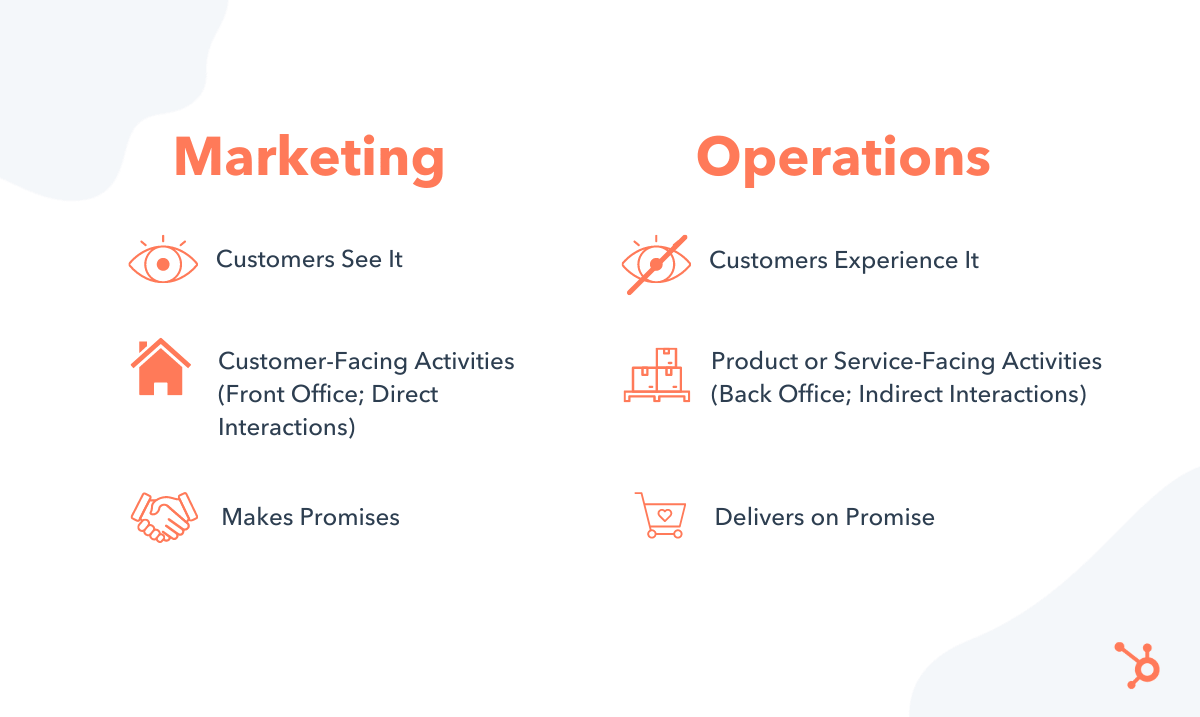
As the diagram below illustrates, Marketing represents highly visible activities that customers tend to interact with directly. It involves making some sort of promise or guarantee to customers who purchase your product or service. 

marketing versus operationsConversely, Operations is like the stealthy cousin of Marketing. It represents those activities that ensure customer orders are fulfilled on time, within budget, and within specification.
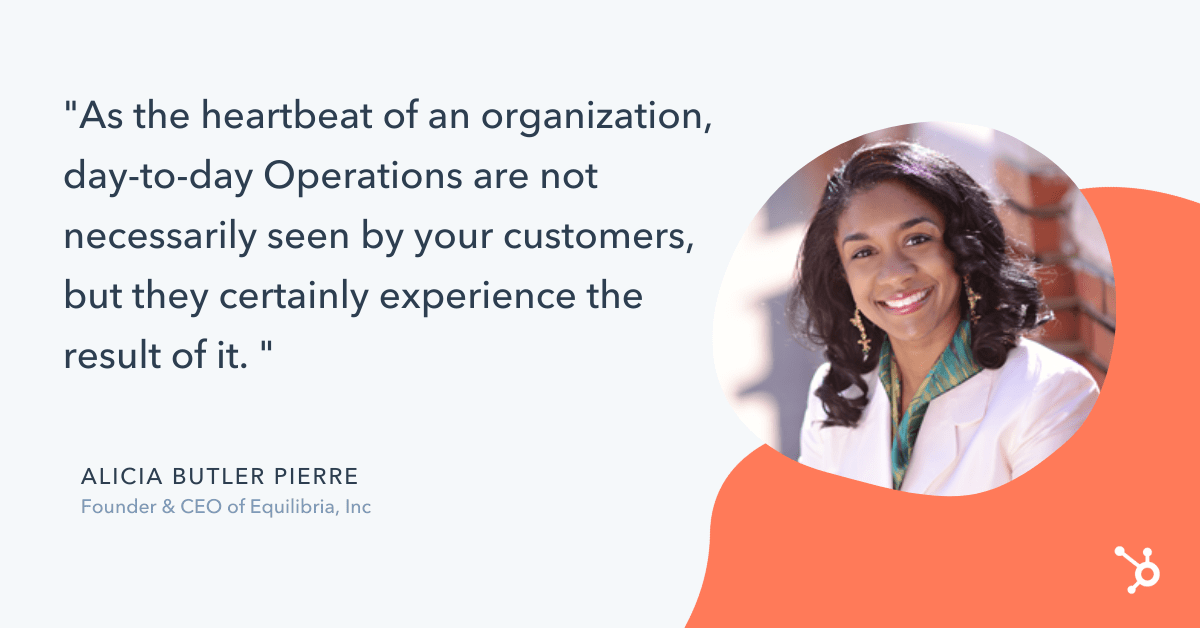
As the heartbeat of an organization, day-to-day Operations are not necessarily seen by your customers, but they certainly experience the result of it.

Operations teams work behind the scenes to make sure a company can deliver on promises made.

A frustrated client in charge of Operations once told me, following a conversation with a Sales Manager, "They sell the dream while we deal with the nightmare!" It's a humorous take on the historical divide between Marketing and Operations teams.

That's why the Revenue Operations movement is so important — it breaks down these silos to encourage transparency while working toward the common goals of customer satisfaction and profitability.

Alicia Butler Pierres quote on Operations

2. Uninterested

Founders and CEOs are known for being big-picture, strategic visionaries. The thought of getting bogged down by details isn't necessarily their strength or interest. It's part of the reason why Operations can take a back seat to the more visible initiatives offered by the Marketing department.

But there's another culprit — small business event planners. Attend any small business seminar, webinar, or conference, and your chances of seeing an Operations topic included is slim to none. This omission creates a knowledge gap for leaders of small businesses and causes disinterest.

Through personal conversations and informal surveys, I've learned that a shockingly high percentage of these event planners think, "Operations is boring." I've also had many of them tell me that, "No one is interested." And perhaps most egregiously that, gasp, "Operations just isn't sexy." This type of thinking is dangerous and does a disservice to those seeking resources to scale to the next level. 

Consider these stats from the U.S. Small Business Administration:

I've often argued that more businesses could graduate from sole-proprietorships if they had a better understanding of Operations. This means job creation which has a net positive effect on local communities and economies.

I also believe that more businesses can avoid failure if they had a solid Operations foundation. Yes, there are number of reasons why a business fails. But the reasons why they fail within the first five years versus years five through ten can vary significantly.

There are businesses that fail not from a lack of customers or poor cash flow, but because they have too many customers.

3. Undiscovered

When small business leaders proactively seek resources to scale, they often find that those resources are not written or formulated with them in mind. Plus, if they are lucky enough to find resources for small businesses, it's usually for those selling tangible goods.

Where can service-based businesses go for guidance on scaling without failing? 

Learning about frameworks like Lean and Six Sigma can be intimidating and sometimes too "corporate" for a small business' needs. Thankfully, there's a growing faction within the Operations community who are actively working to make this information accessible to small businesses. 

Learn More about Operations for small businesses in HubSpot's RevOps & Operations Community

 Dr. Jeffrey K. Liker is one of them and he was careful to be more inclusive in the second edition of his critically acclaimed book, The Toyota Way.

Listen to my interview with Dr. Liker to learn more:

Ignore Operations at Your Own Risk: Cautionary Tales

Perhaps Kyle Jepson, Senior Inbound Sales Professor at HubSpot, said it best: "Operational failures are dramatic and visible. Operational success is invisible." 

He's right. There's no shortage of examples of companies that, to their detriment, chose to ignore the due diligence and rigor required for sustainable Operations and continued to focus on the outward appearances that great Marketing afforded them.

Alicia Butler Pierre quote on operations importance

One example is Ample Hills Creamery. Once known as "Brooklyn's most beloved" establishment, this local New York ice cream shop caught the attention of Disney's CEO. Soon, they landed a contract with Disney World only to lose it all a couple of years later as they hemorrhaged money despite enjoying a steady flow of customers.

One of their investors, Greg O'Connell noted, "It was a fairy tale. They were kind of living in a dream world because their marketing was so great." Their failure resulted in bankruptcy, but other more severe failures land leaders in jail.

 Elizabeth Holmes (Theranos), Adam Neumann (WeWork), Billy McFarland (Fyre Festival), and Trevor Milton (Nikola) are highly visible examples of leaders who, despite receiving warnings, continued to mislead and defraud investors and customers only to find themselves either incarcerated or facing serious allegations.

Examine the back office of any wildly successful company and you will find ironclad Operations: solid teams backed by standardized, streamlined, and efficient processes and technologies. Operations pairs with innovation, and both are imbued into the fabric of the companies that are both profitable and sustainable.

Achieving this balance with Marketing is critical. This is what marketing expert Andrea D. Smith and I talked about on an episode of the Business Infrastructure podcast:

Business is complicated. It requires a constant balancing of not just Marketing and Operations, but all aspects of business. Don't silo or sacrifice one group for the other. Attracting a steady flow of customers is fruitless unless you can also guarantee customer satisfaction.

Join the quest to change the narrative about back-office activities. Operations is savvy, sophisticated, and smart. And that's very sexy!

New call-to-action


from Marketing https://ift.tt/3jusd26
via